

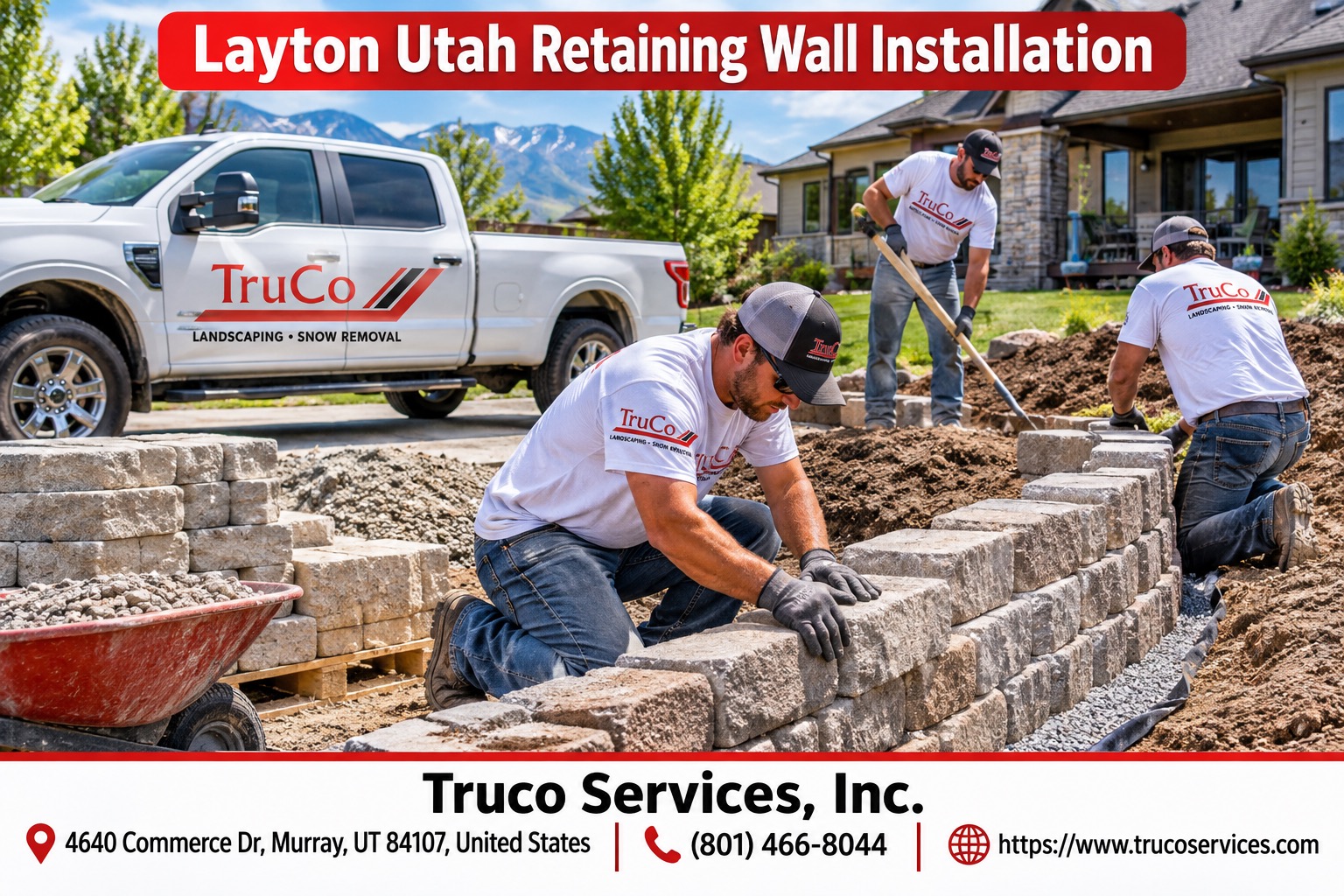
Layton Utah Retaining Wall Installation: Professional Retaining Wall Design and Construction by Truco Services, Inc.
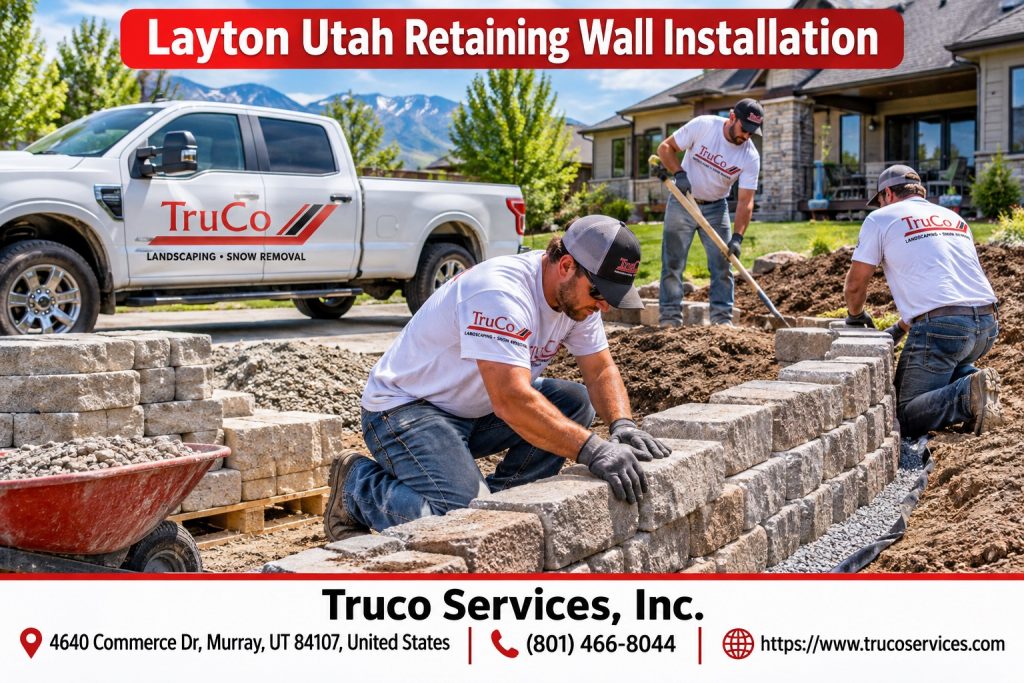
Retaining walls play an important role in creating beautiful, functional, and stable outdoor spaces. In Layton, Utah, where sloped properties, changing elevations, seasonal weather, and soil conditions can present landscaping challenges, a properly installed retaining wall can make a significant difference in the appearance, usability, and long-term stability of a property. Whether you own a residential home, manage a commercial property, or are planning a complete landscape renovation, professional Layton Utah Retaining Wall Installation can help you transform uneven terrain into an attractive and practical outdoor environment.
A retaining wall is more than a decorative landscaping feature. It is an engineered structure designed to hold back soil, manage elevation changes, reduce erosion, and create level areas that can be used for patios, gardens, walkways, lawns, and other outdoor features. When properly designed and constructed, retaining walls provide lasting support while enhancing the overall value and appearance of your property.
For property owners seeking professional landscaping solutions, Truco Services, Inc. offers landscaping expertise and services to help bring outdoor improvement projects to life. From planning and site preparation to landscape construction and finishing details, choosing an experienced landscaping company is an important step toward achieving a successful retaining wall installation.
This comprehensive guide explains the benefits of retaining walls, available materials, installation methods, drainage considerations, design possibilities, maintenance requirements, and why Layton property owners should consider calling Truco Services, Inc.
Understanding Retaining Wall Installation in Layton, Utah
A retaining wall is a structure built to resist the pressure of soil and hold ground in place where there is a difference in elevation. Retaining walls are commonly installed on properties with sloping yards, raised garden beds, uneven terrain, hillsides, and areas where soil movement or erosion needs to be controlled.
Layton properties can have different elevation patterns depending on their location, lot design, and surrounding landscape. Some homeowners have steep backyards that are difficult to maintain, while others have front yards that would benefit from decorative retaining walls and improved planting areas.
Professional retaining wall installation helps address these challenges by creating stable transitions between different elevations.
For example, a homeowner with a sloped backyard might install a retaining wall to create a level patio area. Another property owner may need a retaining wall along a driveway to prevent surrounding soil from shifting. Commercial property managers may use retaining walls to improve landscaping, support parking areas, or create attractive outdoor spaces around buildings.
The right retaining wall depends on the property’s conditions, the intended purpose, the amount of soil being retained, and the desired appearance.
If you need related articles, see the following:
Layton Utah Retaining Wall Design
Layton Utah Hardscape Installation
Benefits of Professional Retaining Wall Installation
Installing a retaining wall offers several practical and aesthetic advantages. A properly planned wall can improve how a property looks while making outdoor areas more useful and easier to maintain.
1. Preventing Soil Erosion
Soil erosion is a common concern on properties with sloped terrain. Rainwater, irrigation runoff, and seasonal weather can gradually move soil downhill. This can expose plant roots, damage landscape beds, create uneven ground, and affect nearby outdoor structures.
A retaining wall helps hold soil in place and creates a more controlled transition between different elevations.
When combined with appropriate drainage and erosion-control measures, retaining walls can help protect landscaped areas from soil loss. This is particularly useful for properties with elevated garden beds, hillside landscaping, and sloping lawns.
2. Creating Usable Outdoor Space
One of the biggest advantages of retaining wall installation is the ability to turn uneven ground into functional outdoor living areas.
A steep backyard may have limited usable space for entertaining, gardening, or recreation. Installing one or more retaining walls can create level terraces that provide additional opportunities for outdoor enjoyment.
These spaces can accommodate:
-
Outdoor patios and seating areas.
-
Garden beds and planting spaces.
-
Lawn areas for recreation.
-
Outdoor kitchens and entertainment areas.
-
Walkways and connecting paths.
-
Decorative landscape features.
-
Fire pit seating areas.
A thoughtfully designed retaining wall can make a previously difficult yard much more functional.
3. Improving Landscape Appearance
Retaining walls add structure, dimension, and visual interest to outdoor environments. They can define different landscape areas and create attractive transitions between lawns, gardens, patios, and walkways.
Stone walls can provide a natural appearance, while concrete block walls offer a clean and organized look. Decorative retaining wall systems can complement modern, traditional, rustic, and contemporary landscape designs.
The right material, color, shape, and finish can help a retaining wall become an attractive focal point.
4. Managing Changes in Elevation
Properties with uneven terrain often require thoughtful landscaping to make different areas accessible and attractive.
Retaining walls provide a practical way to manage elevation changes. Instead of relying on one steep slope, property owners can use terraced walls to create multiple levels.
This approach can improve accessibility, organize outdoor spaces, and create opportunities for additional landscape features.
5. Protecting Landscape Investments
A landscaping project can represent a significant investment. Without adequate support and erosion control, sloped planting areas may experience soil movement that affects plants, mulch, decorative rocks, and other landscape features.
Retaining walls can help stabilize these areas and create more defined planting spaces.
Combined with proper drainage, suitable soil preparation, and appropriate landscaping practices, a retaining wall can help protect the surrounding outdoor improvements.
Types of Retaining Walls for Layton Properties
Choosing the right retaining wall material is essential for achieving the desired appearance, durability, and structural performance. Different materials offer different advantages, and the best option depends on the property’s terrain, project requirements, budget, and landscaping style.
1. Concrete Block Retaining Walls
Concrete block retaining walls are among the most popular choices for residential and commercial landscaping projects.
These walls are constructed using specially designed retaining wall blocks that fit together to create a strong and attractive structure. Many systems use interlocking designs that provide stability and allow contractors to build walls in different shapes and configurations.
Benefits include:
-
Excellent durability.
-
Multiple colors, textures, and finishes.
-
Compatibility with modern and traditional landscapes.
-
Flexible design possibilities.
-
Suitability for many residential and commercial applications.
-
Relatively straightforward maintenance.
Concrete blocks can be used to create straight walls, curved walls, garden borders, and terraced landscaping features.
2. Natural Stone Retaining Walls
Natural stone retaining walls provide a timeless appearance that blends beautifully with outdoor environments.
Stone can complement existing landscape features, trees, gardens, and natural terrain. Depending on the selected material, stone walls can have a rustic, traditional, or sophisticated appearance.
Natural stone is particularly attractive for property owners who want their landscaping to look natural rather than heavily constructed.
Advantages include:
-
Unique natural textures.
-
Attractive color variations.
-
Long-lasting construction when properly installed.
-
Compatibility with gardens and outdoor living areas.
-
Strong visual appeal.
Stone retaining walls require careful planning and installation to ensure stability and appropriate drainage.
3. Poured Concrete Retaining Walls
Poured concrete retaining walls provide a solid construction option for projects requiring a more continuous structural wall.
Concrete can be formed into different shapes and finished with various textures. It can also be incorporated into contemporary landscaping designs.
These walls may be appropriate for areas where substantial soil retention is necessary, provided the design accounts for soil pressure, reinforcement, foundations, and drainage.
Benefits include:
-
Strong structural characteristics.
-
Customizable dimensions.
-
Clean architectural appearance.
-
Multiple finishing options.
-
Suitability for certain demanding site conditions.
Proper engineering and construction practices are particularly important for poured concrete retaining walls.
4. Timber Retaining Walls
Timber retaining walls offer a warm, natural appearance and can work well in certain residential landscaping applications.
Pressure-treated landscape timbers are commonly used for smaller garden walls and decorative landscaping projects.
Timber can be an appealing option for homeowners seeking a traditional or rustic outdoor appearance.
However, wood can deteriorate over time because of moisture, soil contact, insects, and weather exposure. Selecting appropriate materials and understanding the expected lifespan are important when considering this option.
5. Boulder Retaining Walls
Boulder retaining walls use large natural rocks to create attractive landscape structures.
They are particularly effective for properties with natural or rustic landscaping themes. Boulders can also create visual interest while helping manage certain changes in elevation.
Boulder walls require appropriate placement, sizing, foundation preparation, and drainage. Their suitability depends on the site’s conditions and the amount of soil pressure they must resist.
The Retaining Wall Installation Process
Professional retaining wall installation requires careful planning and preparation. A successful project involves more than placing blocks or stacking stones. Every stage contributes to the wall’s stability, appearance, and long-term performance.
Here is an overview of the major steps involved.
Step 1: Property Evaluation and Project Planning
The first step is evaluating the property and determining what the retaining wall needs to accomplish.
A landscaping professional should examine:
-
Existing ground elevations.
-
Soil characteristics.
-
Slope conditions.
-
Surface water movement.
-
Nearby buildings and structures.
-
Existing landscaping features.
-
Access for construction equipment.
-
Property boundaries and easements.
-
Intended use of the finished area.
The purpose of the wall also needs to be established. A decorative garden wall has different requirements from a structural wall supporting a driveway or substantial slope.
Planning at this stage helps determine the appropriate materials, construction methods, and project scope.
Step 2: Measuring and Designing the Retaining Wall
Accurate measurements are essential for determining the wall’s length, height, shape, and position.
The design should account for the amount of soil being retained, the ground conditions, and any additional weight near the wall.
Additional weight, known as a surcharge, can come from vehicles, buildings, patios, fences, or other structures located near the retained soil.
For more demanding installations, a qualified engineer may need to prepare site-specific structural plans.
A good design also considers how the retaining wall will connect with surrounding landscape features. This helps create an attractive finished result rather than a wall that appears disconnected from the rest of the property.
Step 3: Excavation and Site Preparation
Once the project has been planned, the installation area must be prepared.
Excavation removes unwanted soil, vegetation, roots, and debris from the construction area. The contractor establishes the required foundation dimensions and prepares the ground for the retaining wall.
Proper excavation is important because an unstable foundation can lead to movement, leaning, cracking, and premature failure.
The construction area should also be checked for underground utilities before excavation begins. Property owners and contractors should use the appropriate utility-location service before digging.
Step 4: Building a Stable Foundation
The foundation is one of the most important components of retaining wall construction.
For many segmental block retaining wall systems, a compacted aggregate base is used to provide a stable and level foundation. The base material and dimensions should follow the wall system’s specifications and the approved design.
A properly prepared foundation helps distribute the wall’s weight and reduces the risk of uneven settlement.
Foundation requirements vary according to the wall material, height, soil conditions, and structural design.
Step 5: Installing the Retaining Wall Materials
After the foundation is ready, the retaining wall can be constructed.
For block walls, the first course must be positioned carefully because it determines the alignment of the remaining courses. Each additional row is installed according to the manufacturer’s specifications and project design.
For stone walls, individual stones must be selected and positioned to provide stability and a cohesive appearance.
For poured concrete walls, forms, reinforcement, concrete placement, and curing must follow the structural specifications.
Attention to detail during construction helps produce a wall that is both visually appealing and structurally dependable.
Step 6: Installing Drainage Systems
Drainage is essential to successful retaining wall installation.
Water accumulating behind a retaining wall can increase pressure on the structure. Poor drainage may contribute to movement, cracking, bulging, or failure.
A properly designed drainage system may include:
-
Free-draining aggregate behind the wall.
-
Perforated drainage pipes.
-
Appropriate filter fabric.
-
Drainage outlets.
-
Surface grading.
-
Properly directed stormwater runoff.
The specific drainage arrangement depends on the wall design and site conditions.
Water should not simply be redirected onto neighboring properties or toward building foundations. Drainage must be planned so that runoff is managed appropriately.
Step 7: Backfilling and Compaction
After the wall and drainage system are installed, suitable backfill material is placed behind the structure.
Backfill is typically installed in controlled layers and compacted according to the project specifications.
Using appropriate materials and compaction techniques helps reduce settlement and supports the long-term stability of the finished landscape.
Heavy equipment must be operated carefully near newly constructed walls because excessive construction loads can damage the structure.
Step 8: Finishing the Surrounding Landscape
Once construction is complete, the surrounding landscape can be finished.
Depending on the project, finishing work may include:
-
Installing decorative plants.
-
Adding mulch or decorative rock.
-
Creating lawn areas.
-
Installing walkways.
-
Building steps between elevations.
-
Adding landscape lighting.
-
Installing irrigation.
-
Creating garden beds.
-
Connecting the wall to patios and outdoor living areas.
The goal is to make the retaining wall look like an intentional part of the overall landscape design.
Retaining Wall Drainage and Soil Considerations in Layton
Drainage deserves special attention in Layton retaining wall projects. A beautiful retaining wall will not provide lasting value if water pressure and soil conditions are ignored.
Utah properties can experience seasonal precipitation, irrigation runoff, freezing temperatures, and changing soil moisture conditions. These factors can affect how a retaining wall performs over time.
Why Drainage Matters
When water collects behind a retaining wall, it can create hydrostatic pressure. This additional pressure increases the load placed on the structure.
Without proper drainage, the wall may begin to lean, crack, bulge, or shift.
Drainage systems help reduce water accumulation and direct it toward appropriate discharge locations.
Understanding Soil Conditions
Different soils behave differently when exposed to water and changing temperatures.
Some soils drain relatively well, while others retain moisture and can expand or become unstable. Soil conditions influence foundation preparation, wall reinforcement, and drainage requirements.
A professional assessment helps determine whether additional soil stabilization or engineering is necessary.
Managing Freeze-Thaw Conditions
Cold winter temperatures can affect outdoor structures. Water trapped in poorly drained areas may freeze and expand, placing additional pressure on surrounding materials.
Proper drainage, suitable construction materials, and appropriate installation techniques help reduce weather-related risks.
Retaining Wall Landscaping Ideas for Layton Homes
Retaining walls can be incorporated into many different landscape designs. They do not have to serve only as functional barriers. With creative planning, they can become attractive features that improve the entire property.
Terraced Backyard Landscaping
Terraced retaining walls divide a sloping backyard into multiple usable levels.
A homeowner might create an upper garden area, a middle patio, and a lower lawn. Each level can serve a different purpose while maintaining a coordinated appearance.
Terracing is particularly useful when a single steep slope makes the backyard difficult to enjoy.
Raised Garden Beds
Retaining walls can create elevated planting areas that add dimension and organization to a landscape.
Raised garden beds can accommodate flowers, shrubs, ornamental grasses, and other plants.
They also help define outdoor spaces and create attractive transitions between lawns and hardscape features.
Retaining Walls Around Patios
A retaining wall can provide structural support and visual definition around a patio.
It can separate the patio from surrounding slopes, create raised planting beds, and help establish a more private outdoor seating area.
Combining retaining walls with pavers, outdoor lighting, and landscape plants can produce an inviting outdoor environment.
Front Yard Retaining Walls
Front yard retaining walls can improve curb appeal by creating clean transitions between driveways, lawns, walkways, and garden beds.
Decorative stone or concrete block walls can give a property a more organized and finished appearance.
Retaining Walls Along Driveways
Some properties have driveways that run alongside elevated landscaping or sloping ground.
Retaining walls can help define the driveway area and support surrounding soil. Because vehicle loads can create additional pressure, these projects require particular attention to engineering and design requirements.
Decorative Retaining Walls With Lighting
Landscape lighting can highlight wall textures and improve the appearance of outdoor spaces after sunset.
Low-voltage lighting may be incorporated into suitable wall designs to illuminate steps, walkways, planting beds, and seating areas.
This combination provides both visual appeal and practical nighttime visibility.
Retaining Wall Permits and Local Requirements in Layton
Before beginning a retaining wall installation project, property owners should understand applicable building codes and permitting requirements.
Layton City provides a Building Division that handles building permits, inspections, and construction-related requirements. Property owners should verify the requirements for their specific project before construction begins.
In general, retaining walls around four feet or higher, measured from the bottom of the footing to the top of the wall, may require a building permit and engineered plans. Walls supporting additional loads, such as driveways or nearby structures, may also require permitting even when they are shorter. Requirements should be confirmed directly with Layton City because site conditions and applicable code provisions matter.
Other important considerations include:
-
Property setbacks and easements.
-
Underground utility locations.
-
Drainage requirements.
-
Soil stability.
-
Structural engineering.
-
Neighboring property elevations.
-
Construction inspections.
-
Stormwater management.
Layton City provides information about its stormwater management program and construction-related drainage requirements.
If your property is outside Layton City’s municipal jurisdiction, the applicable county or municipality may have different requirements. Davis County provides information about determining the appropriate permitting jurisdiction.
Working with knowledgeable landscaping professionals and qualified engineering specialists when needed can help property owners navigate these requirements.
How Much Does Retaining Wall Installation Cost in Layton, Utah?
The cost of retaining wall installation depends on several factors. Every property is different, so an accurate estimate requires evaluating the site and understanding the project’s requirements.
Some of the most important cost factors include the following.
Wall Height and Length
Larger retaining walls generally require more materials, labor, excavation, and construction time.
A short decorative garden wall may be relatively straightforward, while a long structural retaining wall may require more extensive preparation and specialized construction.
Material Selection
The selected material has a significant influence on project pricing.
Concrete blocks, natural stone, poured concrete, timber, and boulders have different material costs and installation requirements.
Homeowners should consider both the initial installation expense and the expected long-term maintenance.
Excavation Requirements
Some properties require substantial excavation before installation can begin.
Removing existing landscaping, relocating soil, addressing difficult access, and preparing uneven terrain can increase project costs.
Drainage Requirements
Drainage systems are essential for many retaining walls. The amount of aggregate, drainage pipe, filter fabric, and additional drainage work required will affect the overall investment.
Engineering and Permits
Taller walls and walls supporting additional loads may require professional engineering, permit applications, and inspections.
These additional services should be included when estimating the total project budget.
Landscaping and Additional Features
Property owners may want to incorporate steps, patios, lighting, planting beds, irrigation, or decorative finishes into their retaining wall project.
Although these features can increase the initial investment, they can also create a more attractive and functional outdoor space.
The best way to understand your project’s cost is to request a professional assessment and detailed estimate from Truco Services, Inc.
Common Retaining Wall Installation Mistakes to Avoid
Retaining wall construction requires attention to structural details. Mistakes during installation can result in expensive repairs and potentially dangerous conditions.
Here are several common problems property owners should avoid.
1. Inadequate Foundation Preparation
A retaining wall installed on unstable or poorly prepared ground may settle unevenly. This can cause leaning, shifting, and cracking.
2. Poor Drainage
Failing to install an appropriate drainage system can allow water pressure to build behind the wall.
3. Incorrect Material Selection
Not every retaining wall material is appropriate for every application. The material must match the wall’s intended purpose and site conditions.
4. Ignoring Soil Conditions
Soil characteristics influence the structural requirements of retaining walls. Ignoring soil conditions can result in inadequate support.
5. Improper Backfilling
Using unsuitable backfill materials or failing to compact them properly can contribute to settlement and wall movement.
6. Overlooking Engineering Requirements
Large retaining walls and walls supporting additional loads may require engineered designs. Attempting to construct these walls without appropriate professional oversight can create serious structural risks.
7. Neglecting Surface Water Management
Even when a wall has a drainage system, poor grading can direct excessive water toward the structure.
Avoiding these mistakes starts with proper planning, quality materials, and professional installation.
Maintaining Your Retaining Wall After Installation
Once your retaining wall is complete, regular maintenance can help preserve its appearance and performance.
Although many retaining wall systems are designed for long-term durability, they still benefit from periodic inspections.
Inspect for Cracks and Movement
Look for cracks, leaning, bulging, separation between blocks, or other changes in the wall’s appearance.
These conditions may indicate structural movement or drainage problems.
Keep Drainage Outlets Clear
Drainage outlets should remain free of soil, leaves, roots, and other obstructions.
Blocked drainage can allow water to accumulate behind the wall.
Control Vegetation
Plants can enhance the appearance of retaining walls, but large roots and uncontrolled vegetation may interfere with wall structures or drainage systems.
Select plants appropriate for the available space and avoid allowing aggressive roots to compromise the installation.
Monitor Soil Levels
Watch for soil erosion, settlement, or changes in ground elevation around the retaining wall.
Addressing these problems early can help prevent more extensive damage.
Check After Heavy Rain and Winter Weather
Inspect retaining walls after significant rainfall, snowmelt, and seasonal freeze-thaw conditions.
Look for unusual water accumulation, soil movement, or structural changes.
If you notice significant leaning, bulging, or cracking, have the structure evaluated by a qualified professional.
Why Choose Truco Services, Inc. for Retaining Wall Installation in Layton, Utah?
Choosing the right landscaping company is an important part of any outdoor improvement project. A retaining wall is a long-term investment, and property owners want a finished product that looks attractive, functions properly, and complements the surrounding landscape.
Truco Services, Inc. provides landscaping services for residential and commercial properties throughout Utah. The company can help property owners approach outdoor improvement projects with an understanding of landscaping, design, and construction needs.
Here are several reasons to contact Truco Services, Inc. when considering retaining wall installation in Layton.
1. Professional Landscaping Experience
Retaining walls are an important part of comprehensive landscape construction.
A successful installation should complement the surrounding landscape rather than appear as an isolated structure.
Truco Services, Inc. offers landscaping expertise that can help property owners consider how retaining walls fit into their broader outdoor improvement plans.
Whether you are improving an existing landscape or developing an entirely new outdoor environment, having a landscaping company involved can help coordinate the different elements of the project.
2. Customized Landscaping Solutions
Every property has different requirements.
Some homeowners need retaining walls to address steep slopes, while others want attractive raised garden beds or additional space for patios and outdoor entertainment.
Truco Services, Inc. can help you explore landscaping solutions based on your property’s layout, appearance, and intended use.
A customized approach helps ensure that the finished landscape supports your goals.
3. Improved Outdoor Functionality
A retaining wall can completely change how you use your property.
By creating level areas and defining different landscape zones, retaining walls can make outdoor environments more functional.
Truco Services, Inc. can help you consider how retaining walls can work alongside other landscaping improvements to create more enjoyable outdoor spaces.
4. Attention to Landscape Design
A retaining wall should complement the home’s architecture and the surrounding landscaping.
Material selection, wall placement, color, texture, and landscaping details all contribute to the finished appearance.
Truco Services, Inc. can help property owners consider the relationship between retaining walls, garden beds, lawns, walkways, patios, and other outdoor features.
5. Residential and Commercial Landscaping Needs
Retaining walls are useful for more than residential backyards.
Commercial properties may benefit from retaining walls that organize landscaped areas, manage elevation changes, and improve the appearance of outdoor environments.
Truco Services, Inc. serves property owners looking for landscaping improvements that enhance the appearance and usability of their outdoor spaces.
6. Convenient Access to Additional Landscaping Services
Many retaining wall projects are part of larger landscaping improvements.
For example, a homeowner may want to install a retaining wall while redesigning a backyard, adding a patio, improving landscape lighting, or upgrading garden areas.
Working with a landscaping company that provides broader outdoor services can help coordinate these improvements.
Instead of treating every landscape feature as a separate project, property owners can consider how everything works together.
7. A Focus on Long-Term Property Improvements
Retaining walls should be planned with long-term performance in mind.
The right materials, suitable site preparation, appropriate drainage, and proper structural design all contribute to the durability of the finished installation.
Truco Services, Inc. can help you explore the landscaping requirements of your project and determine what professional services and specialized expertise may be needed.
For structural retaining walls requiring engineering, permits, or specialized inspections, the appropriate qualified professionals should be involved.
8. A Convenient Starting Point for Your Project
Getting started with a retaining wall project does not have to be complicated.
By contacting Truco Services, Inc., you can discuss your landscaping goals, explain the challenges affecting your property, and explore potential solutions.
Whether you are interested in a decorative garden wall, a terraced backyard, or a more extensive landscape renovation, a conversation about your project is a practical first step.
Signs That Your Layton Property May Need a Retaining Wall
Not every property requires a retaining wall, but certain conditions indicate that one may be beneficial.
Consider professional landscaping assistance if you notice:
-
Soil washing downhill during rainfall.
-
Steep slopes that are difficult to maintain.
-
Erosion around garden beds.
-
Uneven terrain limiting outdoor activities.
-
Soil movement near walkways or driveways.
-
Difficulty creating level lawn areas.
-
Existing retaining walls that are leaning or deteriorating.
-
Landscaping that lacks clear transitions between elevations.
-
Areas where water runoff creates recurring problems.
A professional assessment can help determine whether a retaining wall is appropriate or whether another landscaping solution would better address the problem.
Transform Your Layton Backyard With Retaining Wall Installation
Your backyard should be a place where you can relax, entertain guests, enjoy gardening, and spend time outdoors. However, uneven terrain and sloping ground can make it difficult to create the outdoor environment you want.
Retaining wall installation provides an opportunity to transform challenging terrain into attractive and functional landscaping.
Imagine replacing a steep, difficult-to-maintain slope with a beautifully terraced backyard. The upper level could feature colorful garden beds, while the lower level could provide room for a patio, outdoor furniture, and recreational activities.
You could also incorporate decorative stone, landscape lighting, attractive walkways, and other outdoor improvements to create a cohesive design.
With thoughtful planning, retaining walls can become an important part of a complete landscape transformation.
Truco Services, Inc. can help you explore the possibilities for improving your outdoor environment and developing a landscaping plan that works with your property.
Schedule Your Layton Utah Retaining Wall Installation Consultation With Truco Services, Inc.
If you are considering Layton Utah Retaining Wall Installation, choosing the right landscaping company is an important first step.
Whether your goal is to control soil erosion, create additional usable outdoor space, improve curb appeal, establish attractive garden areas, or complete a comprehensive landscape renovation, a professionally planned retaining wall can provide significant benefits.
Truco Services, Inc. is ready to help you explore landscaping improvements that complement your property and outdoor goals.
Do not let uneven terrain limit the possibilities for your yard. A well-planned retaining wall can improve the appearance, organization, and functionality of your outdoor environment.
Contact Truco Services, Inc. today to discuss your retaining wall installation needs and take the first step toward creating a more attractive and functional landscape in Layton, Utah.
Contact Truco Services, Inc.
Truco Services, Inc.
Address: 4640 Commerce Dr, Murray, UT 84107, United States
Contact Number: (801) 466-8044
Website: https://www.trucoservices.com
Call Truco Services, Inc. today for professional landscaping assistance and discuss your Layton Utah retaining wall installation project!

Comments are closed.