

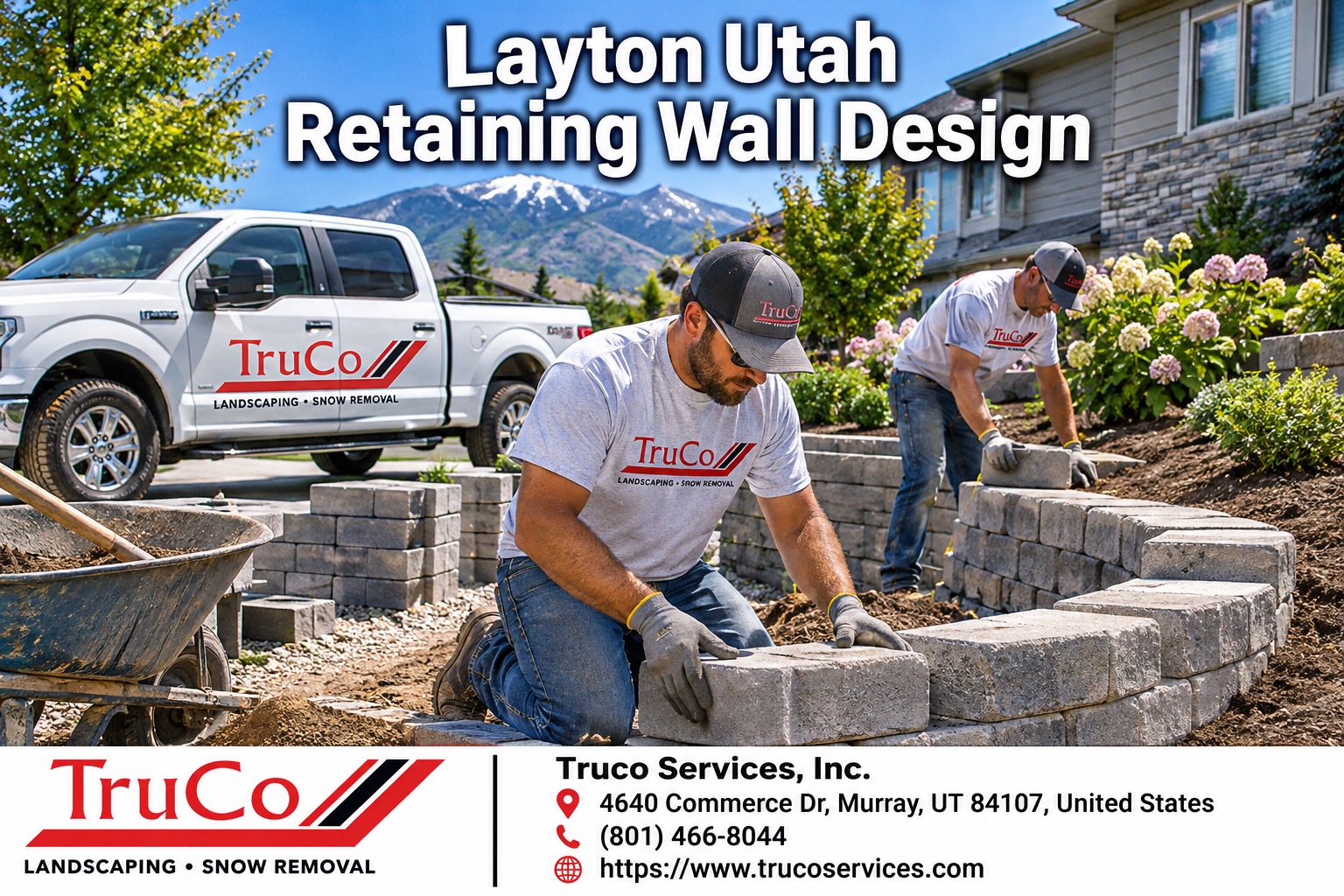
Layton Utah Retaining Wall Design: Expert Planning, Structural Solutions, and Professional Installation
Retaining walls play an important role in creating beautiful, functional, and stable outdoor spaces. In Layton, Utah, where sloped properties, changing elevations, seasonal weather, and varying soil conditions can create landscaping challenges, a properly designed retaining wall can make a significant difference in the appearance, usability, and long-term stability of a property.
Whether you own a residential property that needs additional usable yard space or manage a commercial property that requires effective slope management, professional Layton Utah retaining wall design can help you achieve your landscaping goals while protecting your investment.
A well-designed retaining wall does much more than hold soil in place. It can prevent erosion, improve drainage, create attractive garden spaces, establish level areas for patios and walkways, and add architectural character to your landscape. However, successful retaining wall construction starts long before the first block or stone is installed. Careful planning, material selection, engineering considerations, and proper site preparation are essential.
Working with an experienced landscaping and outdoor construction company such as Truco Services, Inc. can help property owners navigate the design and construction process. From evaluating the property to developing practical landscape solutions, professional assistance can help ensure that your retaining wall complements the property and performs as intended.
This guide explores everything property owners should understand about retaining wall design in Layton, including materials, structural considerations, drainage, design options, installation, maintenance, and the benefits of hiring professionals.
Understanding Retaining Wall Design in Layton, Utah
A retaining wall is a structure designed to hold back soil and manage differences in ground elevation. These walls are commonly installed on properties with slopes, hillsides, uneven terrain, raised garden beds, and areas where landscaping requires multiple elevation levels.
In Layton, retaining walls are especially useful because residential and commercial properties can have different topographical conditions. Some properties have relatively flat yards, while others have significant slopes that make landscaping and outdoor activities more difficult.
A professionally designed retaining wall can address several common property challenges:
-
Preventing soil from moving downhill.
-
Reducing erosion caused by rainfall and irrigation.
-
Creating level areas for outdoor entertaining.
-
Supporting raised planting beds and garden areas.
-
Improving access between different elevations.
-
Establishing attractive landscape boundaries.
-
Protecting certain landscaped areas from soil movement.
-
Making better use of otherwise difficult outdoor spaces.
Retaining walls can also become attractive architectural features. With the right materials, dimensions, colors, and landscaping elements, a wall can complement the home’s exterior and create a cohesive outdoor environment.
Why Retaining Walls Are Important for Layton Properties
Layton’s landscape and seasonal weather patterns make proper retaining wall planning particularly important. Property owners should consider the site’s slope, soil characteristics, water movement, exposure to freezing temperatures, and intended use before selecting a wall design.
1. Managing Sloped Landscapes
Sloped yards can be difficult to maintain and use. Grass mowing, planting, outdoor furniture placement, and recreational activities may become challenging when the property has significant elevation changes.
Retaining walls help transform sloped terrain into more functional outdoor areas.
For example, a homeowner might install a series of retaining walls to create several level sections. One section could accommodate a lawn, another could serve as a patio, and a third could provide space for shrubs, flowers, and decorative landscaping.
Terraced retaining wall designs are especially useful when a single tall wall would be impractical or visually overwhelming.
2. Preventing Soil Erosion
Water runoff can gradually remove soil from sloped areas. This can expose plant roots, damage landscape features, and create uneven ground.
Retaining walls help stabilize selected areas by holding soil in place. When combined with appropriate drainage systems and erosion-control landscaping, they can help reduce soil loss and improve the overall stability of the landscape.
3. Improving Outdoor Living Areas
Many Layton homeowners want outdoor spaces that are comfortable, attractive, and easy to use.
Retaining walls can create level surfaces for:
-
Outdoor patios.
-
Fire pit areas.
-
Seating spaces.
-
Outdoor kitchens.
-
Garden walkways.
-
Play areas.
-
Decorative water features.
A retaining wall can also double as a seating feature when designed and constructed appropriately.
4. Improving Landscape Appearance
A retaining wall can introduce structure and visual interest into an otherwise uneven yard.
Natural stone, decorative concrete blocks, and textured masonry can create an attractive transition between different landscape elevations.
Combining retaining walls with plants, lighting, pathways, and other hardscape features can make the entire property feel more organized and professionally designed.
If you need related articles, see the following:
Layton Utah Hardscape Installation
Layton Utah Modern Patio Design
Popular Retaining Wall Design Options
Choosing the right retaining wall design depends on the property’s slope, soil conditions, drainage requirements, available space, budget, and preferred appearance.
Here are several popular options for properties in Layton.
Segmental Concrete Block Retaining Walls
Segmental concrete blocks are among the most popular retaining wall materials for residential landscaping.
These manufactured blocks are available in different sizes, colors, textures, and shapes. They can create straight walls, curved designs, garden terraces, and decorative landscape borders.
Benefits include:
-
Consistent appearance.
-
Multiple color and texture options.
-
Modular installation.
-
Compatibility with many landscape styles.
-
Flexibility for different wall configurations.
Some segmental retaining wall systems are engineered to work with geogrid reinforcement when additional stability is required.
Natural Stone Retaining Walls
Natural stone retaining walls offer a timeless appearance that works well with many residential and commercial landscapes.
Stone can create a rustic, traditional, or upscale appearance depending on the type of material and installation technique.
Common options include:
-
Fieldstone.
-
Limestone.
-
Granite.
-
Sandstone.
-
Other locally suitable natural stone products.
Natural stone walls can be especially attractive when combined with native plants, decorative gravel, and natural landscape features.
However, the wall must be designed with appropriate structural support, stone selection, and drainage.
Poured Concrete Retaining Walls
Poured concrete walls offer a clean, modern appearance and can be suitable for projects requiring specific structural dimensions.
They can be finished with different textures, colors, and decorative treatments.
Potential benefits include:
-
Customizable dimensions.
-
Strong structural performance when properly engineered.
-
Smooth architectural finishes.
-
Compatibility with contemporary landscape designs.
Reinforcement, foundation preparation, concrete specifications, and drainage must be addressed during the design process.
Timber Retaining Walls
Timber retaining walls can provide a natural appearance and may be appropriate for certain smaller landscaping applications.
They are often used for garden beds, landscape borders, and selected low-height retaining applications.
However, wood is susceptible to moisture exposure, decay, and deterioration over time. Material selection and installation details are important, particularly in areas experiencing freezing winters and seasonal moisture changes.
For larger or more demanding applications, other retaining wall materials may offer better long-term performance.
Terraced Retaining Walls
Terraced retaining walls use multiple shorter walls to manage a significant change in elevation.
This approach can make a steep yard more attractive and functional while creating separate planting and recreational areas.
Terracing may also provide opportunities for:
-
Decorative flower beds.
-
Shrub and tree planting.
-
Garden pathways.
-
Outdoor seating.
-
Integrated landscape lighting.
-
Water features.
The spacing and structural interaction between walls must be evaluated carefully. Multiple walls do not automatically eliminate the need for engineering or reinforcement.
Essential Factors in Retaining Wall Design
A retaining wall should never be designed based on appearance alone. Even an attractive wall can develop serious problems if the underlying structural and environmental conditions are overlooked.
Professional planning considers several important factors.
1. Soil Type and Ground Conditions
Soil conditions directly affect retaining wall stability. Different soil types have different drainage characteristics, weight, and resistance to movement.
For example:
-
Sandy soils generally allow water to drain more easily but may require careful consideration of their ability to remain stable.
-
Clay soils can retain significant moisture and may expand or contract as conditions change.
-
Gravel-based soils typically provide good drainage when properly installed and graded.
-
Mixed soils may require additional investigation to determine their suitability for supporting a retaining wall.
Before construction, the property should be evaluated to identify potential soil-related concerns. Larger or more complex projects may require a geotechnical investigation to establish appropriate design parameters.
2. Wall Height and Structural Requirements
Wall height is one of the most important considerations in retaining wall design.
A short decorative garden wall may have relatively simple construction requirements. A taller wall supporting a hillside, driveway, building, or other substantial load requires much more careful structural planning.
Important considerations include:
-
Soil pressure behind the wall.
-
Foundation depth and bearing capacity.
-
Wall thickness and reinforcement.
-
Reinforced backfill requirements.
-
Nearby structures and property improvements.
-
Groundwater and drainage conditions.
-
Seismic design considerations.
The wall must be designed to resist sliding, overturning, excessive settlement, and other potential failure mechanisms.
In Layton, retaining walls measuring four feet or more generally require a building permit and engineering review. Surcharge conditions, such as supporting a driveway or structure, can also trigger permit requirements even when a wall is shorter. Property owners should confirm the requirements for their specific project with Layton City’s Building Division.
3. Proper Drainage Planning
Drainage is one of the most important parts of a successful retaining wall project.
When water accumulates behind a wall, it creates hydrostatic pressure. This additional pressure can cause walls to crack, lean, bulge, or fail.
A professionally planned drainage system may include:
-
Perforated drainage pipes.
-
Clean drainage gravel.
-
Filter fabric or geotextile.
-
Properly positioned drainage outlets.
-
Surface grading.
-
Water diversion systems.
The specific drainage configuration depends on the wall design, surrounding terrain, soil conditions, and available discharge locations.
In Layton, drainage planning is particularly important because of seasonal precipitation, irrigation, snowmelt, and winter freezing conditions.
Water should be directed away from the wall and neighboring properties without creating new erosion or drainage problems.
4. Freeze-Thaw Conditions
Utah experiences seasonal temperature changes that can affect outdoor construction materials.
During winter, water can enter small openings in masonry, concrete, and surrounding soil. When temperatures drop, freezing water expands and can contribute to cracking, movement, and deterioration.
A good retaining wall design should account for:
-
Appropriate foundation preparation.
-
Suitable construction materials.
-
Effective drainage.
-
Proper backfill.
-
Adequate structural reinforcement.
-
Installation practices appropriate for local conditions.
Choosing materials designed for exterior applications can help improve long-term durability.
5. Nearby Structures and Property Boundaries
Retaining walls should be designed with the surrounding property in mind.
A wall near a home, driveway, sidewalk, fence, utility line, or neighboring property may have additional design requirements.
For example, a wall supporting a driveway must account for the extra weight and pressure associated with vehicles. A wall installed near a building foundation must be evaluated for its potential effects on surrounding soil and structural support.
Property owners should also consider setbacks, easements, drainage rights, and property boundaries before beginning construction.
The Retaining Wall Design and Installation Process
A successful retaining wall project follows a logical process that connects the initial landscape concept with the final construction.
Step 1: Initial Property Evaluation
The first step is evaluating the property and understanding the homeowner’s objectives.
This involves examining:
-
Existing elevation changes.
-
Soil and ground conditions.
-
Drainage patterns.
-
Access to the construction area.
-
Existing landscaping.
-
Nearby buildings and structures.
-
Available installation space.
The evaluation helps determine what type of retaining wall may be appropriate.
Step 2: Establishing the Design Goals
Every property has different landscaping needs.
Some homeowners want to create more usable yard space, while others need to stabilize a hillside or prevent erosion.
Design goals might include:
-
Creating a level backyard.
-
Building a raised garden area.
-
Supporting a driveway or walkway.
-
Developing a terraced landscape.
-
Improving the appearance of a sloped front yard.
-
Establishing attractive outdoor living spaces.
Clearly identifying these goals helps guide material selection, wall placement, and the overall landscape layout.
Step 3: Selecting Materials
Once the project requirements are understood, suitable materials can be selected.
The decision should consider appearance, durability, structural performance, maintenance requirements, and budget.
Concrete blocks may be appropriate for many residential landscape applications. Natural stone may be preferred when a more organic appearance is desired. Reinforced concrete may be suitable for certain demanding structural applications.
Material selection should always follow the requirements of the proposed wall system.
Step 4: Engineering and Permitting
Some retaining wall projects require professional engineering and municipal approval.
The design may need to address structural calculations, soil conditions, reinforcement, drainage, and nearby loads.
Layton City provides a digital permit application and inspection process through its Building Division. Property owners can review the city’s requirements and applicable design criteria before construction begins.
Step 5: Site Preparation and Excavation
Proper preparation is essential for long-term performance.
The construction area may need to be cleared of existing vegetation, debris, old landscape materials, and unsuitable soil.
Excavation establishes the required foundation elevation and provides space for the wall structure and drainage system.
The excavation must follow the approved design, particularly for walls requiring engineering.
Step 6: Foundation Construction
A retaining wall needs a stable foundation.
Depending on the wall system and site conditions, this may involve compacted aggregate, a concrete footing, or another specified foundation arrangement.
The foundation distributes the wall’s weight and helps prevent uneven settlement.
Step 7: Wall Installation and Reinforcement
The wall is constructed according to the selected system and project specifications.
For segmental block walls, this may involve carefully placing and leveling individual courses. Other systems may require concrete placement, steel reinforcement, stone setting, or additional structural components.
Geogrid reinforcement may also be incorporated into certain retaining wall designs to improve stability.
Step 8: Backfilling and Drainage Installation
Appropriate backfill is installed behind the wall according to the design requirements.
Drainage gravel, perforated pipes, filter materials, and other components are incorporated as specified.
Backfill should be placed and compacted carefully to avoid damaging the wall or creating excessive construction pressure.
Step 9: Final Landscaping
Once the retaining wall is completed, surrounding landscaping can be installed.
Potential additions include:
-
Decorative plants and shrubs.
-
Mulch and decorative rock.
-
Lawn areas.
-
Garden beds.
-
Landscape lighting.
-
Pavers and walkways.
-
Outdoor seating areas.
These finishing details help connect the retaining wall with the rest of the property.
Creative Retaining Wall Design Ideas for Layton Homes
Retaining walls can be designed to serve practical purposes while making outdoor spaces more attractive.
Here are some ideas worth considering.
Tiered Garden Retaining Walls
Tiered walls are ideal for properties with noticeable elevation changes.
Multiple levels create opportunities for different plants, decorative materials, and garden features.
Homeowners can use the upper terraces for shrubs and ornamental trees while reserving lower areas for flowers, groundcover, and walkways.
Retaining Walls Around Patios
A retaining wall can help establish a defined outdoor entertaining area.
For example, a sloped backyard can be transformed into a level patio with seating, dining furniture, and decorative landscaping.
The wall can provide a finished architectural boundary that makes the patio feel like a separate outdoor room.
Retaining Walls With Built-In Seating
Some retaining wall designs incorporate seating areas to maximize available space.
These designs can work well around outdoor gathering areas, gardens, and patios.
However, seating height, wall stability, surface materials, and the structural design must be considered together.
Retaining Walls With Landscape Lighting
Integrated lighting can highlight the wall’s texture and improve nighttime visibility.
Lighting can be installed along steps, pathways, wall caps, or adjacent planting areas.
Low-voltage landscape lighting is a popular option for creating a welcoming outdoor atmosphere.
Boulder Retaining Walls
Boulder retaining walls provide a natural appearance that blends well with many Utah landscapes.
They can be especially attractive when combined with native plants, decorative gravel, and natural stone pathways.
Proper boulder selection, placement, foundation preparation, and stability considerations are essential.
Common Retaining Wall Design Mistakes to Avoid
Even relatively simple retaining wall projects can develop problems when important construction details are overlooked.
Here are some common mistakes property owners should avoid.
Ignoring drainage: Water accumulation behind the wall can increase pressure and contribute to structural failure.
Choosing materials based only on appearance: Attractive materials are important, but they must also be appropriate for the wall’s structural requirements.
Building without adequate foundation preparation: An unstable foundation can cause settlement, cracking, and movement.
Underestimating soil pressure: Soil pressure increases with wall height and can be affected by nearby slopes and additional loads.
Ignoring local regulations: Failure to obtain necessary permits or engineering documentation can lead to construction delays and compliance problems.
Using inappropriate backfill: Poorly selected or improperly compacted backfill can negatively affect drainage and stability.
Neglecting maintenance: Even well-built retaining walls should be inspected periodically for signs of movement, drainage problems, and deterioration.
Avoiding these mistakes starts with proper planning and experienced professional guidance.
Retaining Wall Maintenance and Long-Term Care
A professionally designed retaining wall can provide many years of service, but regular maintenance is important for protecting its appearance and structural performance.
Layton property owners should periodically inspect their retaining walls, particularly after heavy precipitation, snowmelt, or significant seasonal temperature changes.
Inspect for Cracks and Movement
Look for visible cracks, leaning sections, bulging surfaces, and separation between wall components.
Small changes can sometimes indicate underlying problems that require professional evaluation.
Keep Drainage Systems Clear
Drainage outlets should remain free of dirt, leaves, roots, and other obstructions.
If water cannot escape properly, pressure may accumulate behind the wall.
Monitor Soil Movement
Watch for soil settling, erosion, or unusual changes in the ground surrounding the retaining wall.
These conditions may indicate drainage problems or movement in the surrounding soil.
Maintain Landscaping
Keep plants and trees appropriately maintained around the wall.
Large root systems can affect certain retaining wall structures, while excessive irrigation can introduce unwanted moisture into the backfill.
Check After Winter
Freezing and thawing can affect outdoor masonry, concrete, and surrounding soil.
Inspect the wall after winter for new cracks, loose materials, drainage issues, or changes in alignment.
If significant movement or structural damage is noticed, consult a qualified professional before attempting repairs.
How Much Does Retaining Wall Design Cost in Layton, Utah?
The cost of retaining wall design and construction varies depending on the property’s characteristics and the project’s requirements.
There is no single price that applies to every retaining wall because different sites require different materials, preparation methods, structural systems, and installation procedures.
Several factors influence the overall investment.
Wall height and length: Larger walls generally require more materials, excavation, labor, and structural support.
Material selection: Natural stone, concrete blocks, poured concrete, and timber have different material and installation costs.
Site accessibility: Properties with difficult access may require specialized equipment or additional labor.
Soil conditions: Unstable or unsuitable soil may require additional preparation, reinforcement, or engineering.
Drainage requirements: Drainage pipes, gravel, filter fabric, and water management improvements contribute to project costs.
Engineering and permits: Projects requiring engineered drawings, geotechnical investigations, and building permits will have additional expenses.
Additional landscaping: Patios, steps, lighting, decorative planting, and walkways can increase the total project investment.
The best way to understand the cost of a retaining wall project is to arrange a property evaluation and request a detailed estimate.
Property owners should focus on long-term value rather than selecting a contractor based exclusively on the lowest initial price. Proper construction and drainage can help reduce the likelihood of expensive future repairs.
Why Hire Truco Services, Inc. for Layton Utah Retaining Wall Design?
Choosing the right company is an important part of any retaining wall project. A retaining wall is a significant landscape improvement, and its success depends on thoughtful planning, appropriate materials, careful construction, and attention to the property’s specific conditions.
For homeowners and commercial property owners researching Layton Utah retaining wall design, Truco Services, Inc. is a company worth contacting for professional landscaping and outdoor improvement assistance.
Here are several reasons to consider Truco Services for your project.
1. Professional Landscaping and Outdoor Improvement Experience
Retaining walls are often part of larger landscape improvement projects.
A property owner may need more than a wall. They may also want to improve grading, create planting areas, establish walkways, or develop a more attractive outdoor living environment.
Working with a landscaping company that understands how outdoor improvements fit together can help create a more cohesive finished property.
Truco Services provides landscaping and outdoor property improvement services, making the company a potential resource for homeowners planning broader landscape projects.
2. Solutions That Consider Your Property
Every property in Layton has different characteristics.
Some homeowners need to address steep backyard slopes, while others want to create raised planting areas or improve the appearance of an uneven front yard.
A successful project should reflect the property’s existing layout, the homeowner’s goals, and the practical requirements of the site.
Truco Services can be contacted to discuss your property’s landscaping needs and determine what services and project arrangements are appropriate.
3. Focus on Functionality and Appearance
A retaining wall should perform its intended purpose while complementing the surrounding landscape.
The right design can help create attractive transitions between different elevations, establish usable outdoor spaces, and improve the overall appearance of the property.
When planning your project, consider how the retaining wall will work with other landscape elements, including plants, pathways, patios, and decorative features.
4. Help With Larger Landscape Improvement Projects
Retaining walls are frequently installed as part of comprehensive landscaping improvements.
For example, a homeowner might want to combine a retaining wall with a new patio, garden beds, decorative rock, or an improved outdoor layout.
Planning these elements together can help achieve a consistent appearance and reduce the need to redesign the surrounding landscape later.
Truco Services is worth contacting to discuss whether your retaining wall project can be coordinated with other outdoor improvement needs.
5. A Convenient Local Utah Company to Contact
Truco Services, Inc. is located in Murray, Utah, and provides a point of contact for property owners throughout the greater Salt Lake Valley and surrounding Utah communities.
Layton homeowners can contact the company to discuss project requirements, service availability, estimates, and the best next steps for their landscaping plans.
6. A Direct Way to Discuss Your Project
Every retaining wall project is different. Speaking with a company representative allows you to explain your property’s challenges and ask questions about potential solutions.
Before contacting Truco Services, consider preparing:
-
Photographs of the area where the wall is needed.
-
An approximate measurement of the proposed wall.
-
Information about the property’s slope.
-
Your preferred retaining wall materials.
-
Any existing drainage or erosion problems.
-
Your desired landscaping improvements.
These details can help make the initial conversation more productive.
For taller, load-bearing, or otherwise regulated retaining walls, make sure the project includes the appropriate licensed engineering and permitting professionals.
Why Layton Homeowners Should Invest in Professional Retaining Wall Design
A retaining wall is more than a decorative landscaping feature. It can influence how a property functions, how water moves through the landscape, and how effectively different elevations are supported.
Professional design helps property owners address these considerations before construction begins.
Some of the most important benefits include:
-
Improved property usability: Transform uneven or sloped ground into functional outdoor areas.
-
Better erosion management: Help control soil movement through appropriate wall and drainage systems.
-
Enhanced appearance: Introduce attractive architectural features that complement the home.
-
More organized landscaping: Create defined areas for lawns, gardens, patios, and walkways.
-
Improved outdoor living: Establish level spaces for entertaining, relaxing, and enjoying the outdoors.
-
Long-term property improvements: Invest in an outdoor feature designed around the property’s specific needs.
The key is selecting an appropriate retaining wall system and ensuring that the design addresses the structural and environmental conditions of the site.
Frequently Asked Questions About Layton Utah Retaining Wall Design
1. What is the purpose of a retaining wall?
A retaining wall holds back soil and manages changes in ground elevation. It can help stabilize slopes, reduce erosion, create level outdoor spaces, and improve the appearance of residential and commercial landscapes.
2. Do I need a retaining wall for my sloped backyard?
Not every sloped backyard requires a retaining wall. However, if the slope limits the property’s usability, creates erosion problems, or requires soil support for landscaping improvements, a retaining wall may be an appropriate solution.
A professional property evaluation can help determine the best approach.
3. What is the best retaining wall material for Layton, Utah?
Concrete retaining wall blocks, natural stone, and reinforced concrete are common options.
The best material depends on the required wall height, structural conditions, appearance, maintenance expectations, and budget.
Materials should also be suitable for outdoor exposure and local freeze-thaw conditions.
4. How tall can a retaining wall be without a permit in Layton?
Layton property owners should generally expect a building permit for retaining walls four feet or taller, measured according to applicable code requirements. Walls supporting additional loads, such as driveways or structures, may also require permits even when shorter.
Always verify the requirements for your specific project with Layton City’s Building Division before beginning construction.
5. Why is drainage important behind a retaining wall?
Drainage prevents water from accumulating behind the wall.
Excessive water pressure can contribute to cracking, leaning, bulging, and structural failure. Proper drainage materials and outlets help manage water movement and protect the wall.
6. Can retaining walls be used for decorative landscaping?
Absolutely. Retaining walls can be attractive landscape features that establish garden boundaries, support raised flower beds, frame patios, and create multiple levels in an outdoor space.
Natural stone and decorative concrete blocks offer several design possibilities.
7. Can retaining walls increase usable backyard space?
Yes. Retaining walls can create level sections on sloped properties, making room for patios, lawns, seating areas, garden beds, and walkways.
The layout must be carefully planned to ensure that the wall system is suitable for the terrain.
8. How long does retaining wall installation take?
The timeline depends on wall dimensions, materials, site accessibility, excavation requirements, weather, and permitting.
A relatively small landscape wall may take considerably less time than a large engineered retaining wall. A contractor can provide a more accurate timeline after evaluating the project.
9. Should retaining walls be professionally designed?
Professional design is particularly important for tall walls, walls supporting additional loads, and projects involving challenging soil or slope conditions.
Even smaller walls benefit from appropriate foundation preparation, drainage planning, and correct installation techniques.
10. Who should I contact for retaining wall services near Layton, Utah?
Property owners researching retaining wall design and landscaping improvements can contact Truco Services, Inc. in Murray, Utah, to discuss their project requirements and available services.
Call (801) 466-8044 or visit https://www.trucoservices.com.
Contact Truco Services, Inc. for Layton Utah Retaining Wall Design
If you are planning a retaining wall project, now is an excellent time to consider how professional landscaping can improve your property’s functionality, appearance, and long-term usability.
Whether you want to manage a sloped backyard, create attractive garden terraces, establish a level outdoor entertaining area, or improve the overall layout of your landscape, proper retaining wall planning is essential.
Truco Services, Inc. is a Utah company you can contact to discuss your landscaping and outdoor improvement goals. Their team can help you explore available services and determine the appropriate next steps for your project.
Do not let an uneven yard, difficult slope, or poorly organized landscape prevent you from enjoying your outdoor space. Start planning an improvement that makes your property more attractive and functional.
Contact Truco Services, Inc. today to discuss your Layton Utah retaining wall design project.
Truco Services, Inc.
Business Address: 4640 Commerce Dr, Murray, UT 84107, United States
Contact Number: (801) 466-8044
Website: https://www.trucoservices.com
Visit Truco Services Website
Conclusion
Professional Layton Utah retaining wall design can transform challenging outdoor terrain into attractive, practical, and more functional landscapes. From preventing erosion and managing elevation changes to creating beautiful patios and garden terraces, retaining walls offer numerous benefits for residential and commercial properties.
However, the success of a retaining wall depends on more than its appearance. Proper soil evaluation, structural planning, drainage, material selection, foundation preparation, and compliance with local building requirements all contribute to long-term performance.
By planning carefully and working with experienced landscaping professionals, Layton property owners can develop outdoor spaces that better meet their needs and complement their homes.
For help exploring your landscaping and retaining wall project, contact Truco Services, Inc. at (801) 466-8044 or visit www.trucoservices.com.
Invest in a well-planned landscape and make the most of your Layton property.

Comments are closed.